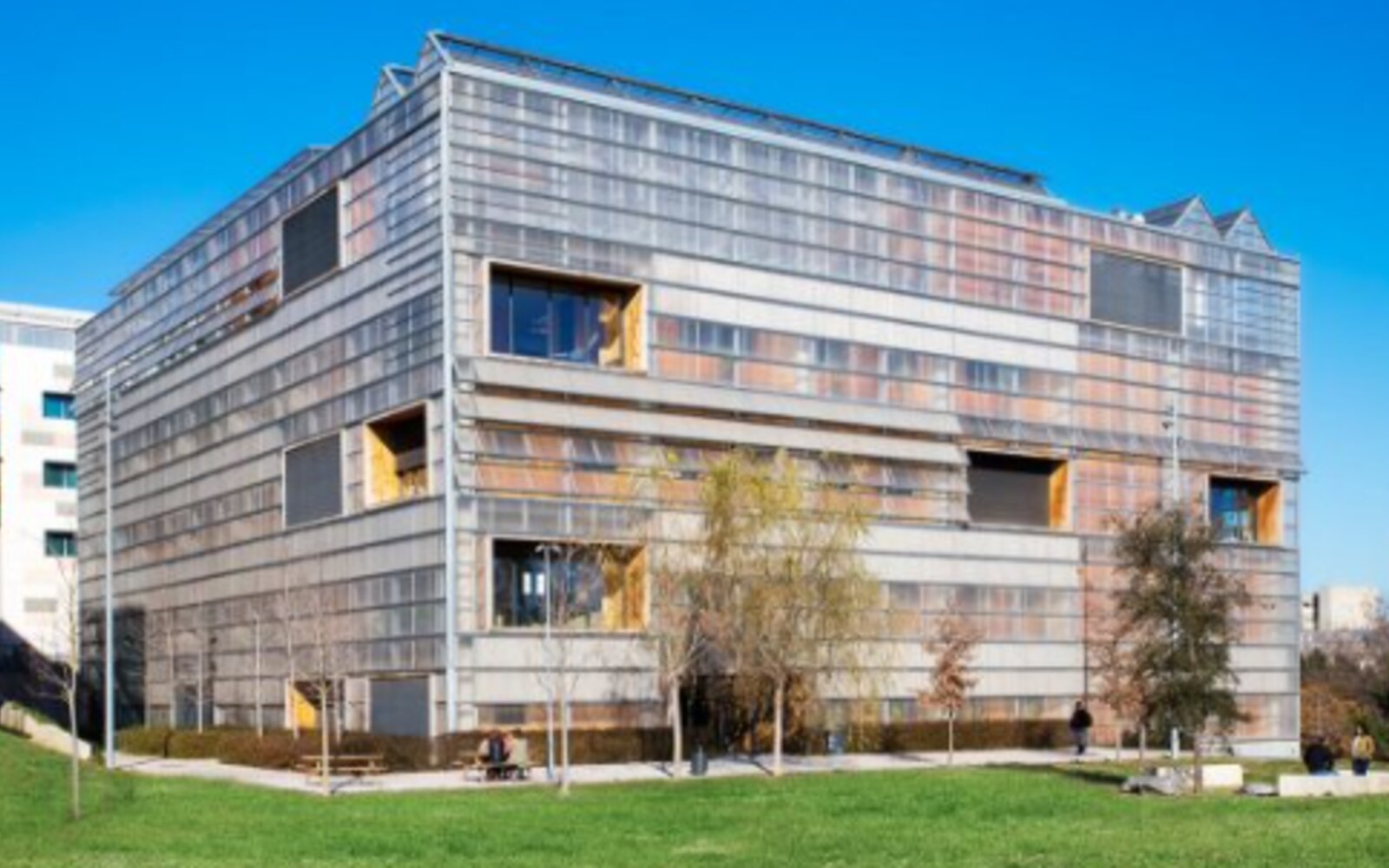
The Barcelona Metropolitan Area network is coordinated by the Institute of Environmental Science and Technology of the Universitat Autònoma de Barcelona (ICTA-UAB). Its five sites represent traffic-influenced, urban-park, forest, coastal and agricultural/airport environments, allowing atmospheric composition to be compared across contrasting urban and peri-urban land uses. The map marks ICTA-UAB; the network extends across the metropolitan area.
Continuous in situ measurements use Picarro cavity ring-down spectrometers (CRDS). ICTA-UAB, IDAEA-CSIC, Observatori Fabra and ICM-CSIC use G2301 instruments for CO₂ and CH₄. UPC-Agropolis uses an IARC-AEMET G2401 instrument for CO₂, CH₄ and CO. CO is therefore measured only at UPC-Agropolis and is used as a tracer of atmospheric processes and sources.
Observations began at ICTA-UAB in May 2021, IDAEA-CSIC in September 2021, Observatori Fabra in April 2022, ICM-CSIC in November 2022 and UPC-Agropolis in November 2025. The network contributed to the ICOS Cities project (2021–2025) and continues operating after the project ended. It is an urban observation activity and should be distinguished from an ICOS-labelled national station.
The network supports studies of urban greenhouse gas variability, the influence of land use and sources, and the evaluation of atmospheric transport and emissions models. These observations complement the background, coastal and continental perspectives of the Spanish atmospheric stations. Data are available for download through the ICOS Cities data portal.